

A car battery can become drained because it isn’t recharging properly, its capacity has declined with age, or lights and electrical devices keep drawing power. If the battery is drained repeatedly, the cause may be the charging system, the battery itself, or something left switched on while the car is parked.
It’s easy to suspect the battery after a difficult start, but a weak battery isn’t the only possible cause. This guide explains how a faulty alternator can interrupt charging, why an older battery may no longer hold a charge, and how accessories or lights can create a parasitic drain. You’ll also learn which signs can help narrow down the cause and when a battery charger or tester can help assess the problem.
Key Takeaways
- Notice dimming lights or interrupted accessories while driving; these can point to a charging-system problem rather than a battery that simply needs recharging.
- Repeated jump-starts may indicate reduced battery capacity. Consider the battery’s age, driving pattern and exposure to extreme temperatures.
- Before leaving the car parked, switch off lights and unplug accessories that may continue drawing power.
- Learn the safe jump-start sequence and how a suitable charger or tester can help you assess the battery’s condition.
1. Defective charging system and alternator
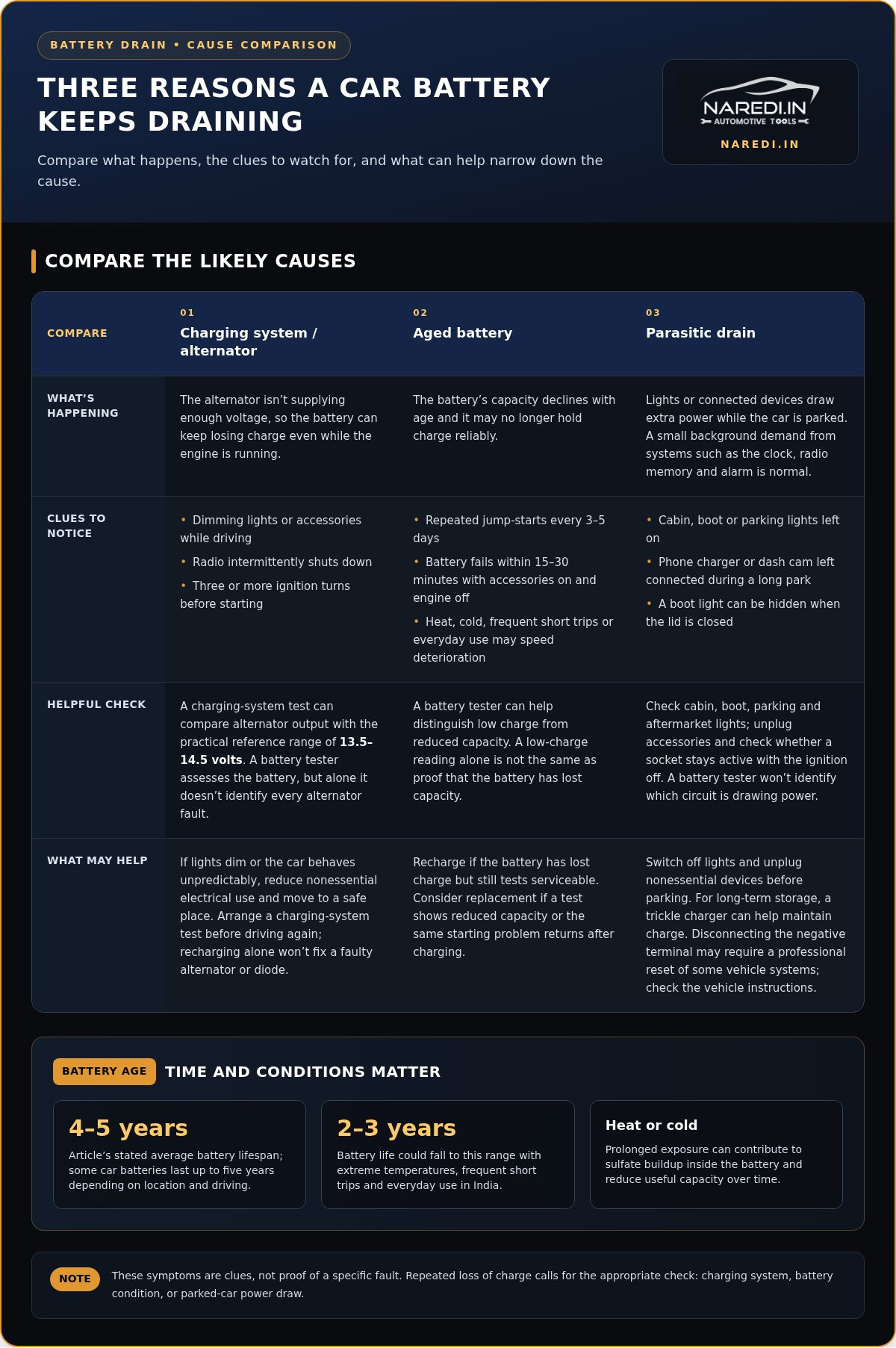
The alternator recharges the battery while the engine is running. If it doesn’t supply enough voltage, the battery can keep losing charge even during a drive. A charging-system fault can therefore leave the car unable to start after a journey, despite the engine having run beforehand.
As a practical reference, an alternator should ideally provide 13.5 to 14.5 volts for effective charging. A charging-system test can compare its output with this range and help identify whether the alternator is undercharging. A Battery Tester can assess the battery’s condition, but that result alone doesn’t identify every alternator fault.
Watch for changes while driving. Dimming lights or accessories when you press the accelerator can signal a battery or charging problem. An intermittently shutting-down radio and needing three or more ignition turns before the engine starts are also warning signs. These symptoms don’t prove the alternator is faulty, but they’re useful details to report during diagnosis.
Defective alternator diodes can also let current drain the battery. This can happen even when the main charging function appears to work, so repeated loss of charge calls for a proper charging-system check. Recharging may restore enough power temporarily, but it won’t fix a faulty alternator or diode.
If your battery drains while driving, reduce nonessential electrical use and move to a safe place if the lights dim or the car behaves unpredictably. Arrange a charging-system test before driving again. Don’t treat repeated jump-starts as a fix: the alternator must recharge the battery, and a fault can leave it losing power again on the road.
2. Old batteries and reduced charge capacity
A battery can lose its ability to hold charge as it ages. Its average lifespan is about 4-5 years, though some car batteries last up to five years depending on where the owner lives and how they drive. Repeated starting demands place load on the battery, while heat and cold can speed up deterioration.
In India, high temperatures and frequent short trips can shorten battery life. Extreme temperatures, frequent short trips and everyday use could reduce it to two to three years. Prolonged exposure to extreme heat or cold can also cause sulfate to accumulate inside the battery, reducing its useful capacity over time.
Repeated jump-starting every 3-5 days, or a battery failing within 15-30 minutes while accessories run with the engine off, can indicate a weakening battery. Recharge it when it has lost charge but still tests serviceable; consider replacement when a battery test shows reduced capacity or the same starting problem returns after charging.
In India, car battery costs vary by vehicle type and brand, as well as the required battery technology and capacity. Compare batteries that match your vehicle’s requirements instead of choosing by brand name alone. The correct specification affects fit and performance.
Incorrect charging or jump-starting can fail to restore dependable starting and make diagnosis harder. Match charging equipment to the battery type and follow the vehicle and equipment instructions. A Battery Tester can help distinguish low charge from reduced capacity, while a suitable Battery Charger can replenish a serviceable battery. Review battery charging and testing options when deciding which tool fits the situation.
If your vehicle will be parked for a long time, a trickle charger can help maintain the battery’s charge. This supports the battery during extended periods without regular use. Choose and use charging equipment according to the vehicle and equipment instructions.
3. Parasitic drain from electrical devices or lights
A parked car still uses a small amount of battery power for systems such as the clock, radio memory and alarm. That background demand is normal. Extra devices can add to it, especially if a phone charger or dash cam remains connected while the car is unused for an extended period.
Lights left on with the ignition off are another direct cause. Check the cabin light, boot light, parking lights and any aftermarket lighting before leaving the vehicle. A boot light can be easy to miss because the closed lid hides it, so check its switch or look for illumination before locking up.
To prevent a parked car battery from losing charge, switch off all lights and unplug accessories such as phone chargers and dash cams. If the vehicle will be parked for a long time, remove nonessential devices and check that they aren’t drawing power through a socket that stays active after the ignition is off.
If the battery keeps losing charge despite these steps, note which accessories were connected and when the car was last used. This can help distinguish a forgotten light or device from a possible electrical fault. A battery tester can help assess battery condition, but it won’t identify which circuit is drawing power.
Disconnecting the negative battery terminal can help prevent parasitic drain during long-term storage. However, this may mean a professional needs to reset some vehicle computer systems afterward. Check the vehicle instructions before taking this step. If the car’s clock, alarm or radio settings matter, consider those systems before disconnecting the terminal.
Unnecessary accessories, including phone chargers and dash cams, can cause a parasitic draw when a car is parked for a long time. They’re worth checking, though their presence alone doesn’t prove a particular device is responsible. Removing accessories you don’t need can help reduce this possible source of drain while the vehicle is unused.
Disconnecting the negative battery terminal can help prevent parasitic drain, but it may mean a professional needs to reset some computer systems afterward. Consider this possible follow-up before choosing this storage method, and consult the vehicle instructions. The aim is to prevent avoidable power use while accounting for the effects disconnecting the terminal may have on the car’s systems.
4. How do I jump-start a car safely in India?
Start with the vehicle owner’s manual. It identifies approved jump-start points and any model-specific restrictions. Cars in India can have different battery locations and electrical systems, so don’t assume every vehicle uses the same connection points. Park both vehicles securely, switch off their ignitions and accessories, and keep jumper cables clear of moving parts.
Before connecting anything, inspect the battery and cables. Don’t proceed if the battery case is cracked, leaking or visibly damaged, or if the cables have exposed conductors. Check both vehicles’ manuals and confirm that the battery types and equipment are compatible. If the instructions conflict or the terminals are unclear, stop rather than guess.
Follow the manufacturer’s connection sequence exactly. Identify the positive and negative terminals from their markings, then connect the clamps only to the points specified in the manuals. Keep the clamps from touching each other or unintended metal surfaces. A wrong connection can damage vehicle electronics or the battery, so don’t improvise the final connection point.
Once the cables are connected, start the vehicles only in the order directed by their manuals. If the engine doesn’t start, don’t keep trying indefinitely or repeatedly reposition live clamps. Stop and review the instructions. After a successful start, disconnect the cables in the specified reverse order, keeping each removed clamp separate from metal and the other clamps.
Portable jump starters also require careful use. Choose one that matches the vehicle and battery, read its instructions, and attach its clamps to the marked terminals. A successful start doesn’t prove the battery or charging system is healthy. If the car needs another jump soon, test the battery and charging system rather than relying on repeated starts.
If your car has an unusual battery location, unclear terminals or persistent starting trouble, follow the procedure in the vehicle manual and get qualified assistance. Careful preparation, correct connection points and the manufacturer’s sequence are essential.
Naredi.in: Battery Chargers
naredi.in offers Battery Chargers and Battery Testers for drivers assessing a low or repeatedly depleted car battery. A charger can recharge a serviceable battery, while a tester helps assess its condition before you decide what to do next. If the car needs a temporary boost to start, a Jump Starter is another relevant tool. Choose equipment that matches your vehicle and battery, and follow the product and vehicle instructions. A charger won’t fix an alternator fault or ongoing electrical drain, so recurring discharge calls for diagnosis of the underlying cause. Explore Naredi’s charging and testing tools at naredi.in.
Take the Next Step Toward Reliable Starts
Make the next starting problem easier to assess. Note when it happens, whether the car was parked or driven, and which accessories were in use. These details can help you choose a practical next step instead of relying on repeated jump-starts. If you find the battery drained again, use the pattern to decide whether testing or charging is the more relevant tool-based approach.
naredi.in offers Battery Chargers, Battery Testers and Performance Additives for automotive use. A charger supports battery charging, while a tester helps assess its condition. Choose a tool suited to the task and follow its instructions alongside your vehicle manual.
For product information or assistance choosing among these tools, contact naredi.in for help. A measured approach can help you handle the next start-up issue with greater confidence.
Frequently Asked Questions
What drains a car battery?
A car battery loses charge when the charging system fails to replenish it, the battery can no longer hold enough energy, or an electrical load keeps drawing power. For example, repeated short journeys may leave less time for charging, while a boot light or plugged-in dash camera can use power when the car is parked. The pattern matters: note whether the problem follows driving, parking or use of a particular accessory.
What are the common causes of a car battery draining overnight?
An overnight discharge can follow a light left on, such as a cabin or boot light, or an accessory that stays powered after the ignition is off. A dash camera or phone charger may also contribute if left connected while the car is parked. If you’ve switched these off and the battery still loses charge, note the conditions and arrange an assessment of the battery and electrical system.
Can a faulty alternator or parasitic electrical draw drain a battery?
Yes. An alternator that doesn’t recharge the battery effectively can leave it losing charge while the engine runs; defective alternator diodes can also cause a drain. A parasitic draw is different: an electrical device or circuit continues using power while the car is off. If the battery loses charge after driving, investigate the charging system; if it happens after parking, look for a continuing electrical load.