

A capable DIY garage needs more than a basic socket set. Automotive tools for car enthusiasts include everyday hand tools, task-specific equipment such as brake bleeder kits and spark plug sockets, and diagnostic tools such as OBD-II scanners and multimeters. The right selection depends on the repairs you plan to tackle and the vehicle systems you need to inspect.
It’s easy to focus on one specialised tool, but a balanced setup is more useful. A well-matched kit supports routine mechanical jobs, while diagnostic equipment can help investigate warning lights and electrical faults before you decide what to do next.
This guide explains how to choose tools for DIY repairs, what to keep in a home garage, and how key items work. You’ll learn where a torque wrench, work light, battery tester, brake bleeder and spark plug socket fit, and what OBD-II scanners and multimeters can tell you. The goal is a practical toolkit built around your vehicle, repair plans and the work you’re equipped to do.
Key Takeaways
- Match each tool to the repair and your vehicle, choosing the right fit and access for the job.
- Use an OBD-II scanner to read diagnostic codes and a multimeter to investigate electrical faults.
- Build a garage toolkit around essential hand tools, safe lifting equipment and task-specific items.
- Compare tool costs by type and purpose, and focus on the capabilities your planned repairs require.
2. Choosing tools for DIY repairs
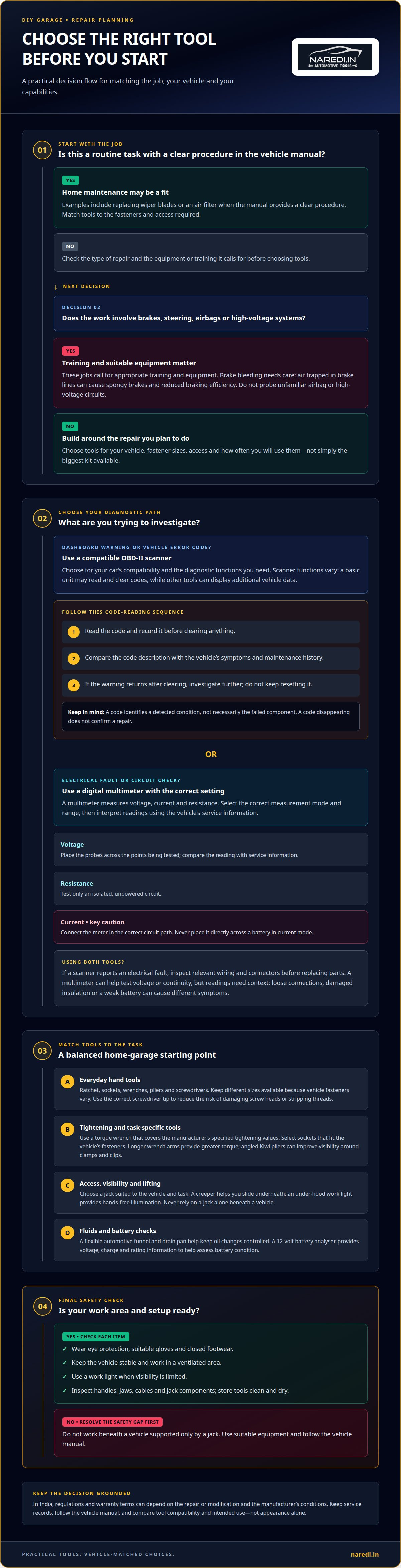
Start with your vehicle and planned repairs, not the largest kit available. Tool kits may suit a specific vehicle type or work across cars and bikes. A basic set can include sockets, a ratchet, wrenches, pliers and screwdrivers. Use the correct screwdriver tip to reduce the risk of damaging screw heads or stripping threads.
Choosing automotive tools for car enthusiasts means matching each item to the job. For car owners in India, select a torque wrench that covers the manufacturer’s specified tightening values, plus sockets that fit the vehicle’s fasteners. Choose an OBD-II scanner for your car’s compatibility and the diagnostic functions you need. No single model suits every vehicle or repair.
Accessible routine tasks, such as replacing wiper blades or an air filter, can suit home maintenance when the vehicle manual provides a clear procedure. Brake, steering, airbag and high-voltage work calls for appropriate training and equipment. Air trapped in brake lines can cause spongy brakes and reduced braking efficiency, so brake bleeding requires care.
In India, regulations and warranty terms can depend on the repair or modification and the manufacturer’s conditions. Don’t assume every DIY change has the same effect. Keep service records and follow the vehicle manual.
In India, automotive tools are available through online retailers and physical tool or auto-parts stores. Compare stated compatibility and intended use, not appearance alone.
Use eye protection, suitable gloves and closed footwear. Keep the vehicle stable, work in a ventilated area, and use a work light when visibility is limited. Never rely on a jack alone beneath a vehicle.
Choose automotive tools for car enthusiasts based on fastener sizes, access and how often you’ll use them, then store them clean and dry. Group sockets by size and inspect handles, jaws and cables before use. Longer wrench arms provide greater torque, while angled Kiwi pliers can improve visibility around clamps and clips. Precision picks can help remove delicate electrical connectors without forcing them with pliers.
3. OBD-II scanners and multimeters
An OBD-II scanner reads vehicle error codes through the diagnostic port. It gives you a useful starting point when a dashboard warning appears, but a code identifies a detected condition, not necessarily the failed component. Record the code before clearing anything, then compare its description with the vehicle’s symptoms and maintenance history. If a warning light returns after clearing, it needs further diagnosis, not repeated resets.
Scanner functions vary. A basic unit may read and clear codes, while other tools can display additional vehicle data. Choose based on the information you need and compatibility with your car. For example, a scanner can help narrow an investigation when an engine warning appears, but it cannot confirm a repair just because the code disappears. Keep a written record of codes and symptoms to track changes.
A digital multimeter measures voltage, current and resistance, making it useful for electrical checks. Start by selecting the correct measurement mode and range. For a voltage check, place the probes across the points being tested and compare the reading with the vehicle’s service information. Resistance checks require an isolated, unpowered circuit. Current measurements require the meter to be connected in the correct circuit path, so avoid placing it directly across a battery in current mode.
Use these tools together when appropriate. If a scanner reports an electrical fault, inspect the relevant wiring and connectors before replacing parts. A multimeter can help test voltage or continuity, but readings need context: a loose connection, damaged insulation or weak battery can cause different symptoms. Don’t probe unfamiliar airbag or high-voltage circuits. Those systems require suitable training and procedures.
For a practical diagnostic setup, choose an OBD-II scanner suited to your vehicle and a multimeter with clear settings and leads. Automotive OBD tools can support code reading as part of a structured troubleshooting process.
3. What essential tools should car enthusiasts keep in a home garage?
Build a home-garage kit around the jobs you can perform and the vehicle you own. A practical starting point includes a ratchet, sockets, wrenches, pliers and screwdrivers. Keep different wrench and socket sizes available because vehicle fasteners vary. Use a torque wrench to tighten automotive bolts to the manufacturer’s specifications, rather than relying on feel alone.
For access beneath the car, choose a jack suited to the vehicle and task. Mechanical jacks lift through a screw thread; hydraulic jacks use hydraulic power, and trolley-style models have wheels for movement. Select a trolley jack with a load rating suitable for the vehicle and operation. A low-profile creeper helps you slide underneath, while an under-hood work light provides hands-free illumination when mounted to the hood.
Oil-change equipment helps keep the job controlled. A flexible automotive funnel directs drained motor oil into a drain pan and can help pour in fresh oil afterward. Keep both close to the work area to reduce spills. A vacuum pump adds diagnostic capability: it can test vacuum-controlled motors and sensors, including brake-related components, and help locate a leaking vacuum line by plugging lines individually and applying vacuum.
Include a 12-volt battery analyser for battery checks. It can provide voltage, charge and rating information, helping you assess battery condition before investigating starting problems. A battery remover and carrier can also help lift a battery from its compartment and move it into the garage.
Store equipment so each tool stays accessible and protected. Group sockets and wrenches by size, keep the drain pan clean, and inspect jack components before use. Match each tool to its task: a creeper supports access, a work light improves visibility, and a battery analyser provides specific battery readings. This focused setup makes routine garage work more organised without turning every repair into a DIY job.
4. How much do car enthusiast tools cost in India?
Tool costs in India depend on the type, construction, features and intended workload. A basic screwdriver serves a different purpose from a torque wrench, OBD-II scanner or hydraulic trolley jack. Set priorities by listing planned jobs first, then budget for tools that support those tasks. A garage focused on battery checks has different needs from one handling oil changes or electrical diagnosis.
Compare like with like. For a socket set, review the included sizes, ratchet and case rather than judging by piece count alone. For a scanner, consider whether its diagnostic functions suit your vehicle and troubleshooting needs. A multimeter’s probes, settings and measurement functions also affect its usefulness. Similar-looking tools may serve different jobs, so match specifications to the work.
Add task-specific equipment to your toolkit in stages. A brake bleeder kit, spark plug socket or vacuum pump serves a particular repair or test. Buy these when a planned job requires them, rather than collecting specialist tools without a clear use. For lifting work, compare the jack type and load rating needed for your vehicle and operation.
Durability and replacement needs also shape your overall spending. A frequently used ratchet or wrench may justify stronger construction, while occasional jobs may call for a simpler option. Check the tool’s intended use, included accessories and storage case. Keep the vehicle manual nearby to identify required fastener sizes and tightening specifications before choosing equipment.
Plan a phased toolkit: cover common hand-tool jobs first, then add diagnostic or specialist equipment as your repair skills develop. Keep battery testing separate from charging, and choose each tool for its function. This approach directs spending towards useful capability, not duplicate pieces. For every purchase in India, weigh compatibility, task coverage and build quality together. The lowest initial outlay may not suit repeated workshop use.
Naredi.in: OBD Tools
naredi.in offers OBD Tools for car enthusiasts who want equipment to support vehicle diagnostics. An OBD-II scanner reads error codes through the vehicle’s diagnostic port, giving you a starting point for investigating a warning light. Use the code alongside the vehicle’s symptoms and service information. It helps guide diagnosis but doesn’t confirm the cause by itself.
For related garage needs, naredi.in also offers Battery Testers and Battery Chargers. A battery tester supports battery checks, while a charger addresses charging needs. Choose each tool for its function, and keep diagnostic findings separate from repair decisions.
If you’re selecting an OBD tool for your DIY setup, contact naredi.in to discuss your requirements.
Build Your Garage Around the Work Ahead
Choose one repair or diagnostic task and shape your toolkit around it. Start with the vehicle’s requirements, identify the equipment needed, then add specialist tools only when a job calls for them. This keeps your garage organised and helps you make purposeful choices as your experience grows.
For automotive tools for car enthusiasts, fit matters as much as function. Consider the vehicle, the task and the information you need from a diagnostic tool. If you’re exploring OBD Tools or related automotive products, naredi.in also offers Performance Additives for vehicle owners considering that category.
Bring your intended use into the conversation so your next choice reflects the work you plan to do. Contact naredi.in for tool advice and take the next step towards a more capable, well-planned home garage.
Frequently Asked Questions
What are the best automotive tool kits for DIY car maintenance in India?
The best kit matches your vehicle and planned maintenance, rather than simply containing the most pieces. A car-focused set suits owners working only on cars; a kit designed for both cars and bikes may make sense if you maintain both. Before choosing, use your vehicle manual to identify the fastener sizes and tools needed for planned tasks.
What OBD2 scanners work with cars sold in India?
An OBD2 scanner works with a car when its stated vehicle compatibility matches that car’s make, model and diagnostic system. Compare the scanner’s supported functions with your intended use, such as reading fault codes or viewing additional data. Since equipment capabilities vary, choose by compatibility and diagnostic needs, not by connector appearance alone. Keep a record of the vehicle details and warning symptoms for clearer troubleshooting.
Which torque wrench, socket set, and diagnostic scanner are best for car owners in India?
Choose a torque wrench that covers your vehicle manufacturer’s specified tightening values and sockets that fit its fasteners. Select an OBD-II scanner compatible with your car and offering the diagnostic functions you need. No single model suits every vehicle or repair.